
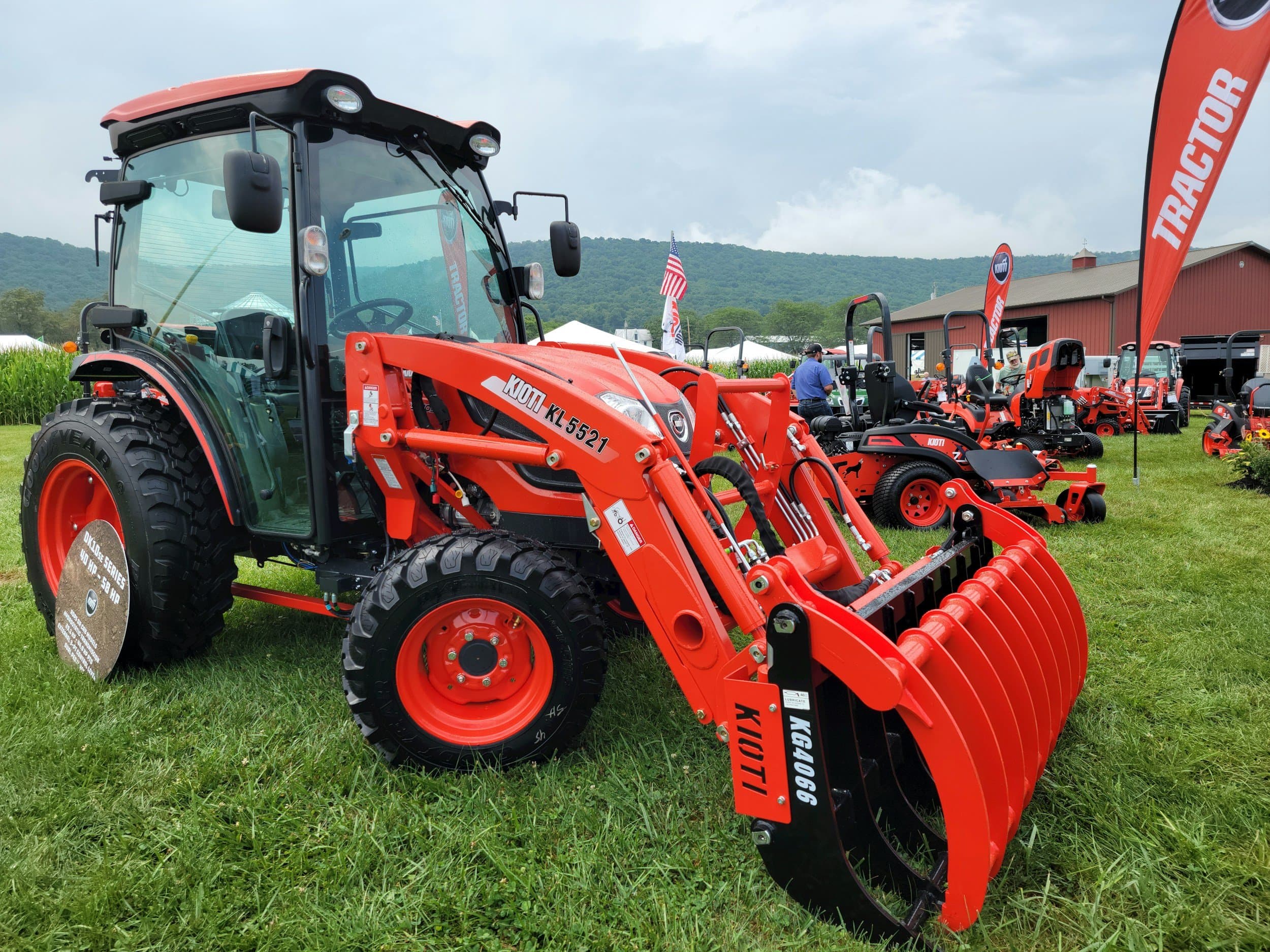
What EGR does and why farm tractors have it
Exhaust Gas Recirculation (EGR) reduces nitrogen oxide (NOx) emissions by recirculating a portion of exhaust gas back into the intake manifold. The recirculated exhaust dilutes the air-fuel mixture and reduces peak combustion temperature — lower peak temperature means less NOx formed.
EGR has been used on agricultural tractors since the early 2000s for Stage IIIA emission compliance. Older tractors rely heavily on EGR for NOx control. Newer Stage IV and Stage V tractors combine lower EGR rates with SCR (Adblue) systems.
Why EGR causes problems on farm tractors
EGR recirculates exhaust gas — which contains soot, unburned hydrocarbons, and other combustion products — into the intake system. Over time these deposits foul the EGR valve, EGR cooler, intake manifold, and intake ports.
Farm tractors accumulate EGR deposits faster than road vehicles because:
High sustained loads produce more soot in the exhaust stream at full cultivation and draft loads.
Low-speed work at partial throttle produces incomplete combustion and more unburned material in the exhaust.
Infrequent high-RPM operation means the intake system never gets the self-cleaning effect of sustained high engine speeds.
A fouled EGR valve causes rough running at idle, black smoke under load, reduced power, and poor fuel economy. A stuck-open EGR valve is the most common failure mode on older tractors.
Signs of EGR problems on your tractor
EGR fault codes on the dashboard diagnostic system.
Rough running at idle or low throttle — common when the EGR valve sticks partially open or closed.
Black smoke under load — stuck-open EGR causes too much exhaust gas in the intake, degrading combustion.
Loss of power — the ECU may limit power when an active EGR fault is detected.
Excessive oil consumption or white/grey smoke — in severe cases, EGR cooler failure can allow coolant into the intake system, visible as white smoke.
Options for EGR problems on farm tractors
EGR valve cleaning: A fouled but functional EGR valve can often be cleaned in-situ or after removal. Professional cleaning removes carbon deposits and restores valve operation. This is the appropriate first step for fouling-related issues.
EGR valve replacement: A mechanically failed valve — cracked, seized, or with failed actuator — requires replacement. Quality aftermarket EGR valves are available for most major tractor brands.
EGR cooler replacement: A leaking EGR cooler requires repair or replacement. More involved than a valve replacement but straightforward for experienced agricultural engineers.
EGR system resolution: For tractors where EGR problems are causing repeated downtime — particularly older Stage IIIA machines where EGR is the primary NOx control mechanism — a permanent solution may be considered. The appropriate approach depends on the tractor's regulatory category and age.
Honest advice on EGR and your tractor
For newer Stage IV and Stage V tractors, the EGR system works alongside the SCR system. Any modification to one system can affect the other. We advise carefully before any work on modern tractors with combined EGR/SCR systems.
For older Stage IIIA tractors where EGR is the sole NOx control mechanism, the regulatory position and practical options are different.
We give honest, specific advice for every tractor before any work starts. If cleaning or replacement is the right answer, we say so.
Common Questions
Can you clean the EGR valve on my tractor on-farm?
In many cases yes — EGR valve cleaning can be performed on-farm during the same visit as a remap. Feasibility depends on the tractor model and the accessibility of the EGR valve.
Will an EGR fault cause my tractor to go into reduced power mode?
Yes — most modern tractor ECUs limit power when an active EGR fault is present. Resolving the fault removes the restriction immediately.
Can EGR problems make my DPF worse?
Yes — EGR fouling increases particulate production, which accelerates DPF loading. On tractors with both EGR and DPF, an EGR problem often worsens DPF performance. Fixing the EGR issue usually improves DPF operation.
Is EGR delete legal on farm tractors?
The legal position depends on the tractor's specific regulatory category, age, and intended use. We advise on a case-by-case basis before any work.
What is the difference between an EGR fault and an Adblue fault?
EGR and Adblue (SCR) are separate emissions control systems, though both affect NOx. On Stage V tractors with both systems, a fault in either can trigger power limitation. A diagnostic assessment identifies which system has the problem.