
How fuel savings work in a plant remap
A plant remap does not make the engine work less hard — it makes it work more efficiently. Better combustion calibration extracts more useful work from each litre of fuel burned. The engine delivers the same or greater output (more torque, faster response) while burning less fuel to do it.
The fuel saving percentage is relatively consistent across machines of the same type and duty cycle — typically 8–12% for excavators, loaders, and similar equipment in standard operation, and 10–14% for articulated dump trucks on loaded haul cycles where the engine runs at sustained high load.
These are averages from the machines we remap, not theoretical projections. Individual results vary based on the machine's condition, the duty cycle, and the operator style.
Excavator fuel savings
Excavators in standard dig-and-dump work are consistent performers for fuel saving. The engine cycles between high load (crowd and lift) and light load (swing and dump) — a pattern well-suited to improved combustion calibration.
Typical saving: 8–12% on fuel consumption per hour.
On a 20-tonne excavator (e.g. Cat 320, Komatsu PC200, Volvo EC220) burning 10–13 litres per hour: — 10% saving = 1.0–1.3 litres per hour saved — At £1.10/litre red diesel: £1.10–£1.43 saved per hour — On a 10-hour shift: £11–£14.30 saved per machine per day — Over 250 working days: £2,750–£3,575 per machine per year
On a large excavator (e.g. Cat 349, Komatsu PC490) burning 18–22 litres per hour, the same percentage saving doubles in absolute litres and cost.
Articulated dump truck fuel savings
Articulated dump trucks show the largest absolute fuel savings of any plant type, because they combine high engine load (uphill loaded hauls) with high fuel consumption rates. This is where remapping has the most compelling financial case.
Typical saving: 10–14% on fuel consumption per cycle.
On a 30-tonne ADT (e.g. Volvo A35, Cat 735, Bell B30E) burning 18–22 litres per hour: — 10% saving = 1.8–2.2 litres per hour saved — At £1.10/litre: £1.98–£2.42 saved per hour — On a 10-hour shift: £19.80–£24.20 saved per machine per day — 6-machine quarry fleet, 250 working days: £29,700–£36,300 annual saving across the fleet
On larger ADTs (Volvo A45, Cat 745, Bell B45E) burning 25+ litres per hour, the saving is proportionally greater.
Wheel loader fuel savings
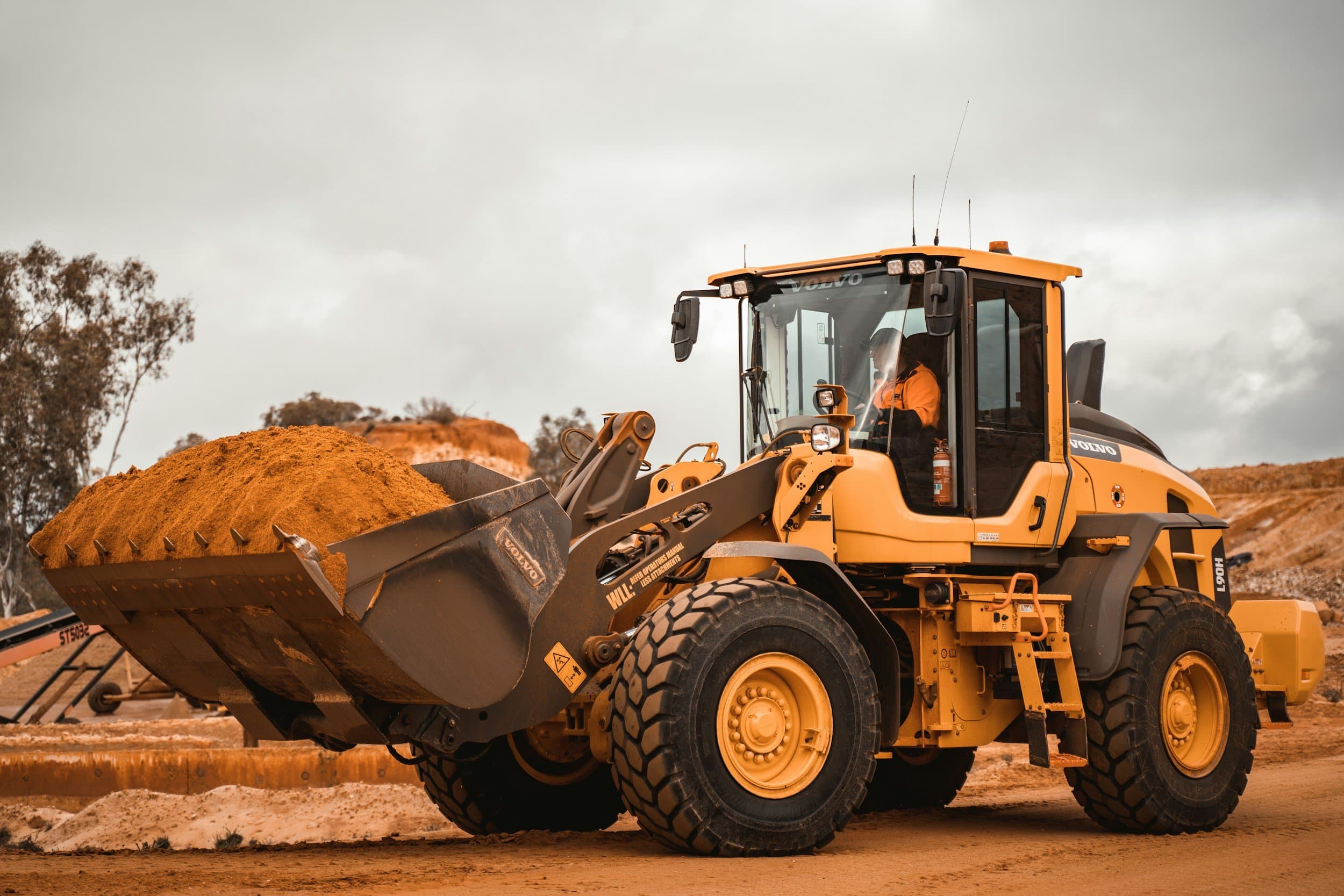
Wheel loaders on continuous loading cycles — quarry face loading, aggregate handling, stockpile management — work at sustained high hydraulic and engine load. The factory calibration is conservative for this duty.
Typical saving: 8–12% on fuel consumption per hour.
On a large wheel loader (e.g. Volvo L180, Cat 972, Komatsu WA470) burning 14–18 litres per hour: — 10% saving = 1.4–1.8 litres per hour — At £1.10/litre: £1.54–£1.98 saved per hour — On a 10-hour shift: £15.40–£19.80 per machine per day
For quarries running loaders on three-shift operations, the annual saving per machine is substantial.
Bulldozer, telehandler, and other plant fuel savings
Bulldozers: 8–12% fuel saving on standard dozing and ripping cycles. On a large dozer (Cat D9, Komatsu D155) burning 25+ litres per hour, the absolute saving is the largest of any tracked plant type.
Telehandlers: 8–10% fuel saving on all-day lift and carry operations. The absolute saving is smaller per machine than large plant, but telehandlers are often the highest-utilisation machine on a construction site.
Motor graders: 8–10% on continuous grading work. Road construction and winter maintenance graders running all shift benefit consistently.
Compactors: 6–10% fuel saving — the percentage is typically at the lower end because compactors operate at lower engine load than excavators or ADTs for much of their cycle.
Working out your own fuel saving
To project the fuel saving for your specific machine:
1. Find the machine's average fuel consumption per hour — your fuel records are the most accurate source; manufacturer data is a useful cross-reference. 2. Apply an 8–12% saving for excavators, loaders, dozers, and graders; 10–14% for ADTs on loaded haul routes. 3. Multiply by the number of working hours per year. 4. Multiply by your fuel cost per litre.
That is your annual fuel saving projection. In our experience, real-world results typically fall within this range for well-maintained machines in normal operation.
Contact us with your machine details and we will give you a specific projection based on the machines we have remapped of the same type.
Free & no obligation
Get a fuel saving projection
Tell us the machine, its average fuel consumption, and annual hours — we'll project the saving.
Common Questions
Are the fuel saving percentages guaranteed?
No — we do not guarantee specific percentages because every machine, duty cycle, and operator is different. The figures quoted are typical across machines we have remapped. We give realistic projections for specific models when you enquire.
Does operator style affect the fuel saving?
Yes, somewhat — an aggressive operator driving high fuel consumption before the remap may see a smaller percentage saving than an efficient operator. However, the remap improves combustion efficiency regardless of operator style, and absolute savings remain meaningful.
Do fuel savings compound across a fleet?
Yes — each machine in a fleet saves independently. A quarry running 8 ADTs, each saving 10% on fuel, realises eight times the single-machine saving. Fleet remapping is one of the highest-return investments available to plant-heavy operations.
How soon after the remap do fuel savings become apparent?
Immediately — the improved calibration takes effect as soon as the remap is complete. Some operators notice the difference in throttle response and engine character within the first hour. Fuel meter readings confirm the saving within the first full shift.
Do fuel savings apply for both red diesel and white diesel?
Yes — the combustion efficiency gain applies regardless of fuel type. The absolute financial saving is proportional to the fuel price per litre.